SEO Guide
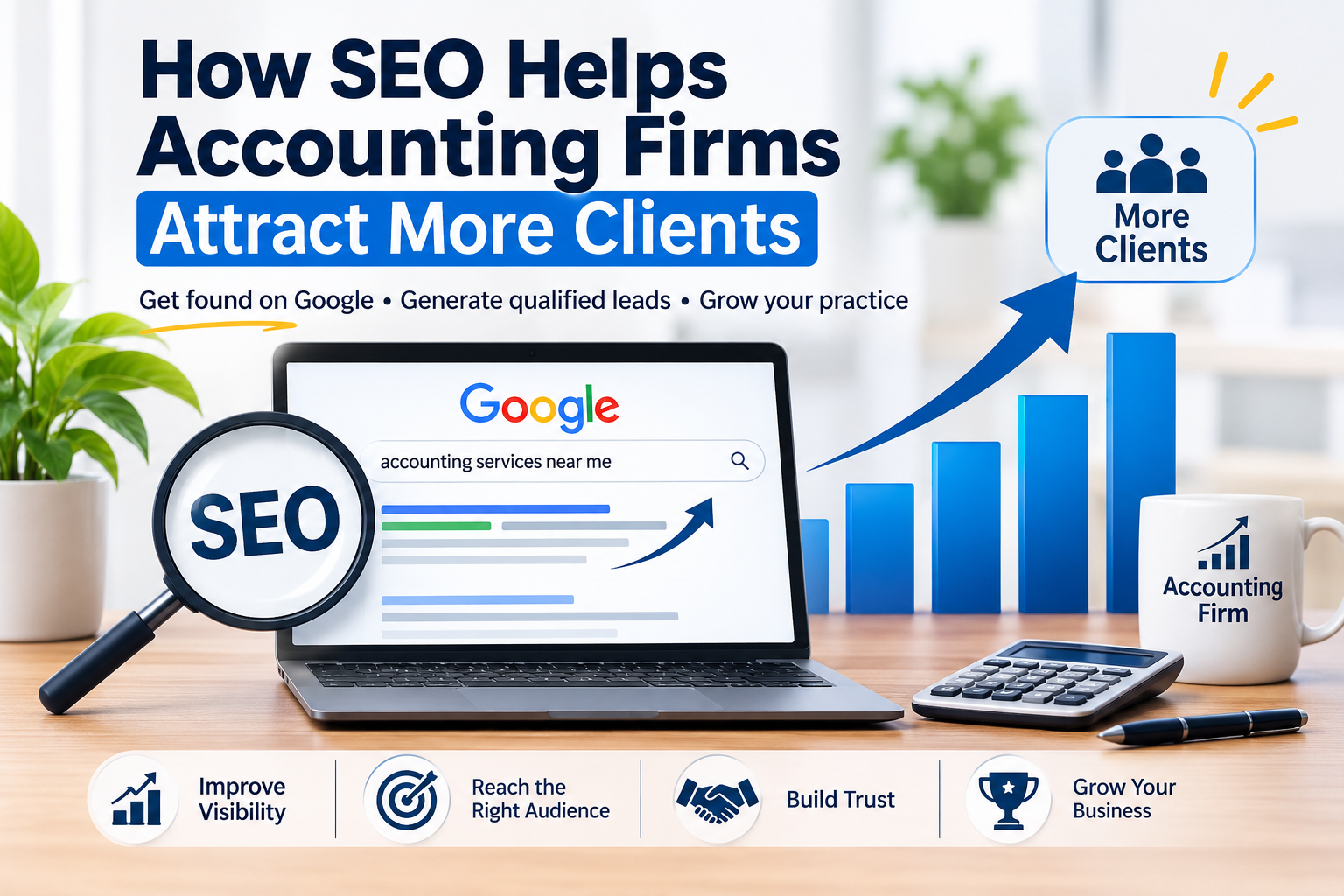
How SEO Helps Accounting Firms Attract More Clients
Published by : Manisha
Running a successful accounting firm requires more than delivering accurate financial services and maintaining strong client relationships. You also need a consistent way to reach people and businesses looking for accounting support.
Today, many potential clients turn to Google when they need help with tax preparation, bookkeeping, payroll, financial reporting, or accounting advice. If your firm does not appear in relevant search results, potential clients may choose a competitor instead.
This is where SEO for accounting firms becomes important.
Search engine optimization (SEO) helps your accounting firm improve its visibility in search engines, reach people actively looking for your services, and attract relevant enquiries. Instead of depending only on referrals or paid advertising, SEO helps build a long-term online presence that can continue bringing potential clients to your website.
In this guide, we’ll explain how SEO helps accounting firms attract more clients, which strategies matter most, and how you can build an effective SEO plan for sustainable business growth.
Why Do Accounting Firms Need SEO?
People often search online before choosing an accountant or accounting service provider. They may compare firms, check reviews, explore service pages, and look for professionals who understand their financial requirements.
For example, a business owner might search for:
- Accounting firms near me
- Small business accountant in your area
- Tax preparation services for small businesses
- Bookkeeping services for startups
- CPA firm for business tax planning
These searches show that people are actively looking for accounting services.
If your website appears for relevant searches, you have an opportunity to connect with potential clients at the right time.
SEO helps accounting firms:
- Improve visibility on Google for relevant accounting-related searches.
- Reach potential clients who are already looking for professional services.
- Generate enquiries through website forms and phone calls.
- Build trust through useful content, reviews, and a professional website.
- Improve local visibility in the areas they serve.
- Reduce long-term dependence on paid advertising.
- Build a stronger online presence against competing accounting firms.
Important: Higher rankings do not automatically guarantee more clients. Your website must also communicate your services clearly, demonstrate credibility, provide a good user experience, and make it easy for visitors to contact your firm.
1. Improve Your Google Visibility for Accounting-Related Searches
One of the biggest benefits of SEO is that it helps your accounting firm appear when potential clients search for relevant services.
For example, if you offer tax preparation, bookkeeping, and business accounting, your website should have dedicated pages that explain each service and target the searches associated with it.
Rather than targeting every accounting keyword on your homepage, create focused service pages.
| Accounting service | Example search keyword |
|---|---|
| General accounting | Accounting services for small businesses |
| Tax preparation | Tax preparation services for businesses |
| Bookkeeping | Bookkeeping services for small businesses |
| CPA services | CPA services for small businesses |
| Payroll accounting | Payroll services for small businesses |
| Local accounting | Accountant near me |
Each service page should explain what you offer, who you help, the problems you solve, and how a potential client can get started.
For example, a dedicated bookkeeping page can target people searching for bookkeeping services instead of trying to make the homepage rank for every service.
This approach helps search engines understand your website and helps visitors find the information they need.
2. Attract Potential Clients Who Are Already Searching for Your Services
SEO can help your firm reach people who have an existing need for accounting support.
Consider the difference between these two situations:
- A person casually browsing social media may not currently need an accountant.
- A business owner searching for a small business accountant may be actively looking for professional assistance.
The second visitor may have a stronger intention to contact an accounting firm.
This is why keyword research is an important part of accounting SEO. It helps identify the phrases people use when looking for accounting services and the intent behind those searches.
You should focus on different types of search intent:
Service-based searches
- Accounting services for small businesses
- Tax preparation services
- Bookkeeping services for businesses
- CPA services near me
Location-based searches
- Accountant in your area
- CPA firm in your area
- Tax accountant in your area
Problem-based searches
- How to manage small business bookkeeping
- Help with business tax preparation
- How to organize financial records for tax season
Service-based and location-based searches can help attract people looking for professional assistance. Informational searches can introduce your firm to people researching accounting questions.
A balanced keyword strategy helps your website reach potential clients at different stages of their decision-making process.
3. Generate More Local Enquiries Through Local SEO
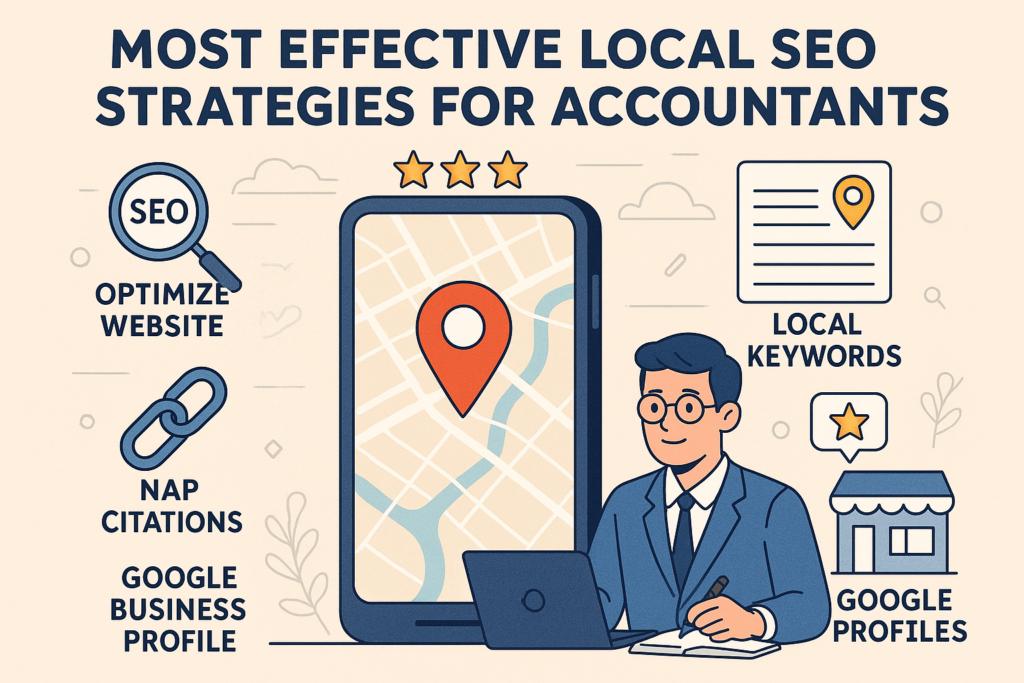
Many accounting firms serve clients within specific cities, states, or surrounding areas. For these businesses, local SEO for accountants is an important way to improve visibility in geographically relevant searches.
When someone searches for an accountant near them, Google may display local business listings alongside organic website results.
To improve your local presence, focus on the following activities:
Optimize Your Google Business Profile
Your Google Business Profile helps people discover your firm through Google Search and Google Maps.
Make sure your profile includes:
- Correct business name, address, and phone number.
- Accurate business hours.
- Relevant accounting service categories.
- A detailed business description.
- Updated website and contact information.
- Genuine client reviews.
- Recent business updates, where relevant.
Keep your profile information consistent with the details on your website.
Create Location-Specific Pages
If your accounting firm serves multiple locations, create useful location pages where there is a genuine business presence or service area.
For example:
- Accounting Services in Your Service Area
- CPA Services in a Nearby District
- Tax Preparation Services in a Nearby Area
Each page should contain relevant local information, services offered, and clear contact details.
Avoid creating multiple pages that only change the city name while repeating the same content. Every location page should provide useful and genuinely distinct information.
Encourage Genuine Client Reviews
Reviews help potential clients understand other customers' experiences with your firm.
You can encourage satisfied clients to share honest feedback. Respond professionally to reviews and avoid offering incentives in exchange for positive ratings.
4. Build Trust Through Helpful and Informative Content
Accounting is a professional service where clients need confidence in the people handling their financial information.
Your website should do more than list services. It should answer common questions, explain important processes, and demonstrate your firm's knowledge.
A well-planned blog strategy can help you reach people who are researching accounting-related topics.
Here are some useful blog topic ideas:
- How to Choose the Right Accountant for a Small Business
- Common Tax Preparation Mistakes Small Businesses Should Avoid
- Why Small Businesses Need Professional Bookkeeping Services
- How Often Should a Business Review Its Financial Records?
- What Should You Look for When Hiring a CPA Firm?
- Bookkeeping vs. Accounting: What Is the Difference?
When creating content, focus on providing accurate, practical, and easy-to-understand information.
For accounting and tax-related topics, accuracy is particularly important. Have qualified professionals review technical information, cite reliable sources where appropriate, and clearly distinguish general educational information from personalized financial or tax advice.
Your content should also include relevant links to your service pages so readers can explore the professional services your firm provides.
For example, a blog about bookkeeping mistakes can naturally link to your bookkeeping SEO or bookkeeping service page where relevant.
5. Optimize Your Website to Turn Visitors into Enquiries
Getting visitors to your website is only one part of the process. You also need to make it easy for them to understand your services and take the next step.
A website that attracts traffic but does not generate enquiries may have problems with its content, navigation, credibility, or contact process.
Here are some important website elements to improve:
Clear Service Pages
Create separate pages for your main services, such as:
- Business accounting
- Tax preparation
- Bookkeeping
- Payroll services
- CPA services
- Financial reporting
Explain the benefits of each service and the types of clients you support.
Visible Contact Information
Make your phone number, email address, and contact form easy to find.
Consider placing contact options in the website header, on service pages, and near relevant calls to action.
Strong Calls to Action
Use clear and relevant CTA messages, such as:
- Schedule a Consultation
- Speak With an Accounting Professional
- Contact Our Accounting Team
- Get Help With Your Business Accounting
Avoid vague messages that do not explain what visitors should do next.
Mobile-Friendly Experience
Many people browse websites from mobile devices. Your website should load properly, display readable text, and provide easy-to-use navigation and contact buttons.
Website Speed and Security
A slow or poorly functioning website can discourage visitors from exploring your services. Review page speed, mobile usability, HTTPS security, and technical errors regularly.
Important: Track meaningful actions such as contact form submissions, phone number clicks, consultation bookings, and qualified enquiries. Website traffic alone does not show how effectively SEO is contributing to business growth.
6. Use SEO to Compete With Other Accounting Firms
Your potential clients may be comparing several accounting firms before making a decision.
If competing firms have stronger search visibility, more useful content, better local profiles, and clearer service pages, they may receive more opportunities to connect with those clients.
Competitor analysis helps you understand what other firms are doing well and identify areas where your website can improve.
Review competitors for:
- Keywords they rank for.
- Services and locations they target.
- Content topics they publish.
- Website structure and navigation.
- Backlinks from relevant websites.
- Google Business Profile activity.
- Reviews and reputation.
- Opportunities they may be missing.
Do not simply copy competitors' content or backlink profiles. Use the findings to create more useful resources, clearer service pages, and a stronger experience for your potential clients.
For example, if competitors have detailed pages about small business tax services but your website only has a short paragraph, you may have an opportunity to create a more comprehensive and helpful page.
7. Build Authority With Relevant Backlinks
Backlinks are links from other websites pointing to your website. Relevant and trustworthy backlinks can support your website's authority and search visibility.
For accounting firms, the focus should be on quality and relevance rather than collecting as many links as possible.
Potential backlink opportunities include:
- Accounting and finance publications.
- Relevant business directories.
- Local business associations.
- Professional industry websites.
- Business resource publications.
- Guest contributions on relevant websites.
You can also build authority by publishing original resources that other websites may find useful, such as accounting checklists, business finance guides, and educational articles.
Avoid spammy link-building services, paid link schemes that violate search engine guidelines, and irrelevant websites created only to publish backlinks.
Internal linking vs. backlinks: Internal links connect pages within your own website, while backlinks come from external websites. Both have different roles in your SEO strategy.
8. Track SEO Performance and Measure Lead Generation

SEO should be measured by more than keyword rankings and website traffic.
Your accounting firm needs to understand whether organic search is helping generate meaningful business opportunities.
Use tools such as Google Analytics 4 and Google Search Console to monitor performance.
| SEO metric | What it helps you understand |
|---|---|
| Organic clicks | How many people visit from unpaid search results |
| Search impressions | How often your pages appear in Google Search |
| Keyword rankings | How your website performs for target searches |
| Organic landing pages | Which pages attract search visitors |
| Contact form submissions | How many visitors submit enquiries |
| Phone clicks | How many visitors click your phone number |
| Consultation bookings | How many visitors schedule a meeting |
| Qualified leads | How many enquiries match your ideal client profile |
Set up conversion tracking for important actions, including:
- Contact form submissions.
- Clicks on phone numbers.
- Email clicks.
- Consultation bookings.
- Other meaningful enquiry actions.
Review these metrics regularly to understand which pages and keywords are contributing to business enquiries.
For example, a service page may receive fewer visitors than a general blog but generate more consultation requests. This is why lead quality and conversion data matter alongside traffic.
SEO vs. Paid Advertising for Accounting Firms
SEO and paid advertising can both help accounting firms reach potential clients, but they work differently.
| Factor | SEO | Paid Advertising |
|---|---|---|
| Visibility | Earned through organic search performance | Purchased through advertising campaigns |
| Cost | Requires investment in content, optimization, and ongoing work | Requires an advertising budget and campaign management |
| Results | Usually take time to build | Can generate visibility soon after campaigns launch |
| Traffic | Can continue after individual optimization activities | Usually stops when campaigns are paused or budgets run out |
| Trust | Organic visibility can support credibility | Ads are clearly identified as sponsored results |
| Long-term value | Can build lasting search visibility | Depends on continued campaign investment |
For many accounting firms, a combination of SEO and paid advertising can be useful.
Paid campaigns may help generate enquiries for specific services or during busy tax periods, while SEO can build organic visibility over time.
The right approach depends on your firm's goals, competition, budget, and service areas.
Common SEO Mistakes Accounting Firms Should Avoid
Even if your accounting firm has a website, certain SEO mistakes can limit its ability to attract relevant visitors.
Avoid these common issues:
- Targeting too many keywords on one page: Each important service should have a clear topic and search intent.
- Ignoring local SEO: Firms serving specific locations should optimize their local presence.
- Publishing thin content: Pages should provide useful information rather than simply repeating keywords.
- Using duplicate location pages: Create genuinely useful local content instead of changing only city names.
- Ignoring mobile users: Make sure visitors can browse and contact your firm easily on mobile devices.
- Not including clear CTAs: Every important service page should guide visitors toward a relevant next step.
- Buying low-quality backlinks: Focus on relevant, trustworthy link opportunities.
- Not tracking enquiries: Monitor calls, forms, and bookings instead of focusing only on rankings.
- Leaving service pages outdated: Review your content regularly to keep service details and information accurate.
- Ignoring website technical issues: Check indexing, broken links, page speed, and crawlability.
Fixing these issues can help create a stronger foundation for your accounting firm's SEO strategy.
How Long Does SEO Take to Bring Clients to an Accounting Firm?
SEO is a long-term marketing strategy, and results do not happen overnight.
The time required depends on several factors, including:
- Your website's current SEO condition.
- Competition in your target locations.
- The number of services and keywords you want to target.
- The quality and relevance of your website content.
- Your backlink profile and website authority.
- The consistency of your SEO activities.
Some improvements, such as fixing technical issues or optimizing existing pages, may show progress earlier. Building strong organic visibility for competitive searches generally takes longer.
Rather than expecting immediate results, accounting firms should follow a consistent SEO plan and review performance regularly.
How Fiscal Discovery Helps Accounting Firms Grow Through SEO
At Fiscal Discovery, we understand that accounting firms need more than website traffic. They need an online presence that helps potential clients discover their services and take meaningful action.
Our accounting-focused SEO approach is designed to improve search visibility and support business growth through strategies such as:
- Accounting keyword research: Identifying relevant search terms based on your services and target audience.
- On-page SEO: Improving service pages, headings, metadata, content, and internal links.
- Technical SEO: Identifying website issues that may affect crawling, indexing, and user experience.
- Local SEO: Improving visibility for relevant location-based searches.
- Content strategy: Planning useful blogs and service content around your target audience's needs.
- Link building: Identifying relevant opportunities to strengthen website authority.
- Performance tracking: Monitoring rankings, organic traffic, enquiries, and other important actions.
Whether you operate an accounting firm, CPA practice, tax preparation business, or bookkeeping company, your SEO strategy should reflect your services and business goals.
Explore our SEO services to learn how we can help improve your firm's online visibility.
Frequently Asked Questions
1. How does SEO help accounting firms attract more clients?
SEO helps accounting firms appear in relevant Google searches when potential clients are looking for accounting, bookkeeping, tax preparation, or CPA services. Better search visibility can bring relevant visitors to your website and create more opportunities for enquiries.
2. What are the most important SEO strategies for accounting firms?
Important strategies include keyword research, service page optimization, local SEO, Google Business Profile optimization, helpful content creation, technical SEO, relevant link building, and conversion tracking.
3. Is local SEO important for accounting firms?
Yes. Local SEO helps accounting firms improve visibility for searches related to their service areas. An optimized Google Business Profile, accurate business information, genuine reviews, and useful location pages can support local visibility.
4. How can an accounting firm generate more leads online?
An accounting firm can generate online leads by improving its search visibility, creating dedicated service pages, publishing helpful content, optimizing its Google Business Profile, displaying clear contact information, and tracking form submissions, calls, and consultation bookings.
5. Should accounting firms invest in SEO or Google Ads?
Both can be useful. Google Ads can provide faster paid visibility, while SEO helps build organic search visibility over time. The right combination depends on your firm's budget, competition, goals, and timeline.
6. How much does SEO cost for an accounting firm?
SEO costs vary depending on the number of services and locations targeted, competition, website condition, and the level of work required. A professional SEO plan should be based on your firm's goals and specific requirements rather than a fixed price for every business.
7. Can a small accounting firm compete with larger firms through SEO?
Yes. A smaller firm can focus on specific services, local markets, and relevant client needs. A focused strategy with useful content, well-optimized service pages, and a strong local presence can help it compete for relevant searches.
8. How can I measure the success of SEO for my accounting firm?
Track organic clicks, search impressions, keyword performance, landing page traffic, contact form submissions, phone calls, consultation bookings, and qualified enquiries. These metrics provide a better understanding of SEO's contribution to business growth.
Final Thoughts
SEO gives accounting firms an opportunity to reach potential clients when they are actively searching for professional financial services.
From improving Google visibility and local rankings to publishing helpful content and building website authority, every part of your SEO strategy should support a clear business objective: attracting relevant visitors and turning them into enquiries.
However, successful SEO requires consistency. A well-optimized website, useful service pages, relevant content, a strong local presence, and regular performance tracking work together to build sustainable online visibility.
If you want to improve your accounting firm's search presence and attract more relevant enquiries, Fiscal Discovery can help you build an SEO strategy aligned with your business goals.
Ready to improve your accounting firm's online visibility?
Contact our team to discuss your growth goals.
Disclaimer: This article is for general informational and marketing purposes only. It does not constitute accounting, tax, legal, or financial advice.